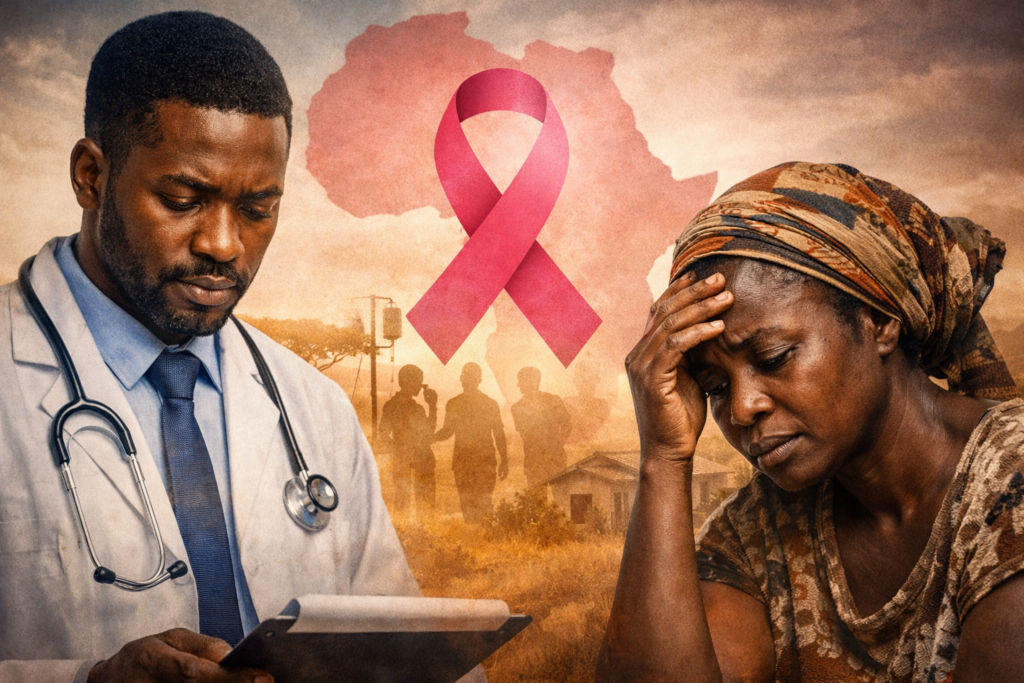
Cancer is no longer rare in Africa.
It’s rising fast.
Yet survival rates remain painfully low.
This is not because cancer is unbeatable.
It’s because the system often fails patients before treatment even begins.
Late Diagnosis Is the Biggest Problem
Most cancer cases in Africa are discovered too late.
Why?
- People ignore early symptoms
- Cancer screening is limited or unavailable
- Many fear hospitals or believe cancer is a death sentence
- Primary healthcare systems are weak
By the time patients seek help, the cancer is already advanced.
At that stage, treatment becomes harder, more expensive, and less effective.
Limited Access to Quality Treatment
Cancer care is expensive everywhere.
In Africa, it’s often out of reach.
Many countries face:
- Few cancer treatment centres
- Shortage of oncologists and specialists
- Limited radiotherapy and chemotherapy facilities
- Long waiting times for care
Some patients travel hundreds of kilometres for treatment.
Others simply give up.
Access should not decide who lives.
Cost Pushes Patients Away
For many families, cancer treatment means financial ruin.
Most African countries lack strong health insurance coverage.
Patients must pay out of pocket for:
- Diagnosis
- Drugs
- Surgery
- Follow-up care
Many stop treatment halfway.
Not because they want to.
But because they can’t afford to continue.
Low Awareness and Cultural Barriers
Cancer education is still poor.
In some communities:
- Cancer is linked to witchcraft or curses
- Traditional remedies are tried first
- Medical care is delayed until symptoms worsen
This delay costs lives.
Awareness saves lives.
Silence kills
What Must Change
Improving cancer survival in Africa is possible.
But it requires action.
1. Stronger Early Screening
- Breast, cervical, prostate, and colorectal cancer screening must be accessible
- Community health workers should lead awareness efforts
Early detection turns cancer into a treatable disease.
2. Better Healthcare Infrastructure
- More cancer centres
- More trained specialists
- Better equipment
Treatment should not depend on location.
3. Affordable Care
- Universal health coverage must include cancer care
- Governments must subsidise treatment and medications
No one should choose between life and poverty.
4. Education and Public Awareness
- Open conversations about cancer
- Community-based education programs
- Clear information on symptoms and prevention
Knowledge reduces fear.
Fear delays treatment.
The Bigger Picture
Cancer survival rates are not just a medical issue.
They reflect:
- Policy choices
- Healthcare investment
- Social priorities
Countries like Rwanda show that strong systems save lives.
Africa doesn’t lack solutions.
It lacks urgency.
A Question Worth Asking
If cancer is rising,
and solutions already exist,
why are so many still dying?
Change starts with asking better questions —
and demanding better systems.